Can't find something ?

March 12, 2013

Duos for Dual exposures!

Olympus Infinity II & Fisheye No.2 --- they work together beautifully!

I loaded a roll of Lomo Color Neg 100 into my Olympus Infinity II. Took some photos at the Oakland Zoo. Once the roll was done the camera rolled the film back into itself leaving the easily accessible "flap" that you use to get the film on the exposure spool. I then loaded this roll of film into my Fisheye No. 2 and shot away.

This is what happened.


------------------
-----
--
-

January 30, 2013

The house

I was talking about posting come of my "collages."
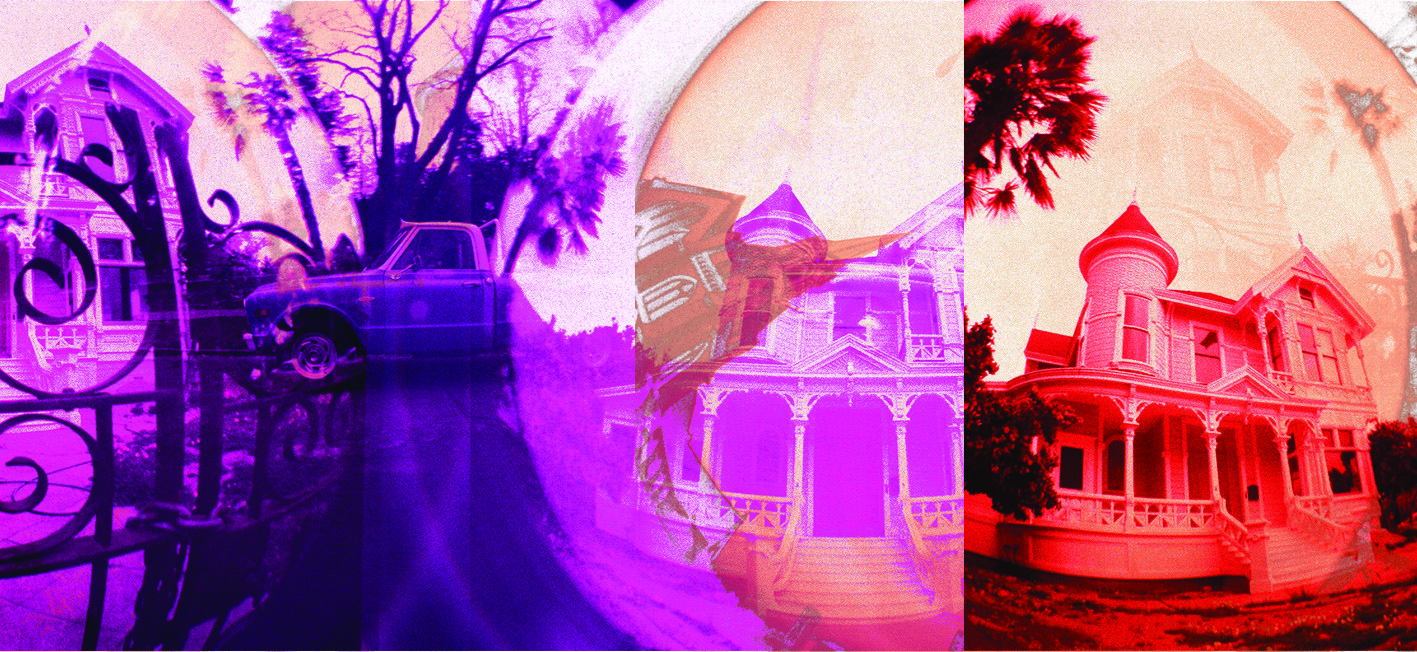
Here is a digital collage I created with digitized film negatives.

The Process :

I shot with Lomography X-Tungsten film on a Lomography Fisheye No.1. The film was then cross processed at the lab. The cross processing actually left the pink, purple, and red tones to the 
photographs. 

-
---
-------

-------------------

------------------------------------ 


------------------------------------
-------------------
-------
---
-

I then imported these photos into Adobe Photoshop, and started to manipulate the images to piece them together. It just seems right that these photos sit amongst one another. I physically rewound the film in order to have the photos overlap one another.

Getting i-grammy with myself

For someone that loves the SURPRISE of shooting with film, it may be strange to admit I do enjoy that application called Instagram. It is pretty darn fun.

Importing photos from my computer so I can plop them into the no-brainer application to squari-fy and light-i-dize the photos is a fun past-time. I also enjoy using PhotoGrid to puzzle together particular photos to make a collage. 

Is this selling out? Is this art? 
I will contest --- there is a creative process here. There is a knack to making something look good.
The process may be quite intricate. The process may be within a smartphone, but it exists. 
Will this be accepted as art in the future? 
Some avant-garde artists have recorded video on there phones, and have applied that to works of art...

I have the urge to go into the darkroom and create collages with enlarged negatives.

I've done it before...
Chopping up enlarged litho-negs and digital negatives and plopping those on a piece of photo paper. Exposing the light to it...then voila! You have a collage on one piece of paper made out of photographs. 
The same idea goes for collage making from snipping together bits and scraps of things, and then photocopying it to get a print out of 1 entire image.

(stream of consciousness flows............)
Hmmmmm ... I have a thing for collage, photograms, etc.
I should explore this... I have just realized my work in the past has leaned towards this process in many different mediums. The process of piecing many things together to create 1 whole.

Examples of past "hands-on" work to come. 

For now... enjoy my PhotoGrids!

-
---
-------

-------------------

------------------------------------


------------------------------------
-------------------
-------
---
-

REPEAT
REPEAT
REPEAT
REPEAT
REPEAT

-------------------------------------
Ranging from material...
photos of photos,
digital phone photos,
&
digitized film negatives.
------------------------------------
-------------------
-------
---
-

January 23, 2013

I now have a FISHEYE once again!

Life is SO good.

I didn't realize what I was missing out on.
Yes, I loved playing around with other cameras ... but ... FISHEYE is my one true love.


I have another roll coming soon...
As always please visit my Portfolio to see my other works.

Cheers!

November 29, 2012

Multiple exposures are fun.

I love exposing film once, twice, and even three times. I have only done this on one singular camera by manually rewinding the film, and then advancing it once again to trigger the shutter button. One thing that I haven't gotten "down pat" is how to make sure that the 2nd or 3rd exposure is in the exact frame as the 1st exposure. There really is no way to know, unless you are completely OCD and can gauge the film winder with the film advancement knob. I always end up getting really abstract frames that overlap, that could technically be printed as one large panoramic photograph. When you get the film developed and scanned by another party, they often make a "crop" for the image, which is the standard 2/.3 ratio that can be later be enlarged. Typically you would have to scan the film yourself if you would like to have the complete panoramic-esque photo to work with. Be sure to NOT get your negatives cut!

It is rare if you can get the film with a perfect 2nd exposure right over the 1st.

I have a point and shoot Olympus Infinity II, which automatically winds in the film for you. I love that when the roll is done it winds it right back.
The magic of this camera is that it leaves the small tab of film out of the container. This allows you to safely remove the film from the camera without any exposures, and then load it into another camera. As you may know... rolling film back into its container is hard to gauge, and once it is all rolled in...that's it...unless you want to risk going into the dark and dissect and reassemble the roll.


My next venture for photography...
Take a full roll of film on the Olympus Infinity II...
Then reload into a camera that has a masking capability, such as a Fisheye, or Panorama. 
This way the masked areas will show case the original photo, while the unmasked area will showcase the secondly exposed photo.


A fellow photographer of mine, Traci McMillan seems to have got it down pat. Look at the amazing double exposed photos she created.


Cheers!